
By Elvis Kachi
In a world that continually strives for progress and inclusivity, the rights and experiences of LGBTQ individuals remain a paramount measure of a society’s commitment to equality. This holds for Africa, a continent that grapples with a complex tapestry of cultural, religious and legal challenges surrounding queerness. Specifically, Nigeria stands as a striking example, where the struggle for LGBTQ rights intertwines with deeply ingrained societal norms and the weight of colonial legacies.
Across Africa, the LGBTQ community faces a range of legal and social hurdles, often rooted in colonial-era laws and cultural conservatism. These struggles mirror a global pattern, where queerness intersects with historical prejudices, societal biases and a lack of understanding. While some African nations have taken significant steps toward recognising and protecting LGBTQ rights, Nigeria remains ensnared in a deeply polarised landscape.
Nigeria’s legal landscape is marked by the introduction of anti-gay laws that have exacerbated the challenges faced by the queer community. The Same-Sex Marriage Prohibition Act, enacted in 2014, is one such piece of legislation that has perpetuated discrimination and created an environment of fear and hostility for openly queer individuals. Under this law, same-sex relationships are criminalised, with penalties ranging from imprisonment to public ostracism.
Within this oppressive framework, queerness takes on a profound significance for individuals who dare to express their authentic selves. It becomes a powerful assertion of identity, a catalyst for change, and a pursuit of equality and freedom. The queer community in Nigeria embraces diverse identities, encompassing sexual orientation, gender identity, and gender expression, challenging conventional norms and redefining societal perceptions.
For many openly queer Nigerians, Pride Month serves as a symbol of resilience, solidarity and hope. Despite the absence of large-scale public celebrations, queer individuals and their allies find ways to commemorate and uplift the community’s spirit. Pride Month offers an opportunity to foster dialogue, raise awareness and amplify voices that have long been silenced.
At its core, queerness in Nigeria embodies a profound longing for acceptance, understanding and love. It calls for a society that recognises and values the richness of human diversity, free from discrimination and prejudice. Queerness invites us to question the notion of what it means to be human, to challenge the confines of traditional gender roles, and to embrace love and relationships in all their diverse forms.
As we explore the experiences of openly queer individuals during Pride month in Nigeria, it is essential to recognise the ongoing struggle for equality. It is a struggle that demands our attention, empathy, and a collective commitment to dismantling the barriers that hinder progress. By amplifying the voices and stories of the queer community, we can begin to foster an environment of inclusivity, understanding, and acceptance in Nigeria and beyond. The Washington Blade spoke with seven queer Nigerians on what Pride Month means to them, amid the country’s extremely strict anti-gay policies.
Justin Chidozie
Justin Chidozie founded the Centre for Health Education and Vulnerable Support in 2019. CHEVS prides itself on being a people-centric society, which pushes for everyone to have equal access to health and human rights, irrespective of sexuality, gender and social status.
“For me, it’s simple,” he tells the Blade. “It’s celebrating resilience, celebrating community, and also celebrating the ancestors of the LGBTQI+ advocacy movement. I do not just see it as the whole parade, but I also see it as a time of reflection on how far we have come. This year, Pride was extremely special to me because we have seen the rise of the anti-gender movement, and the Christian evangelical movement in Africa, trying to support the parliament with all the funds at their disposal, trying to criminalise LGBTQI+ identities.”
Matthew Blaise
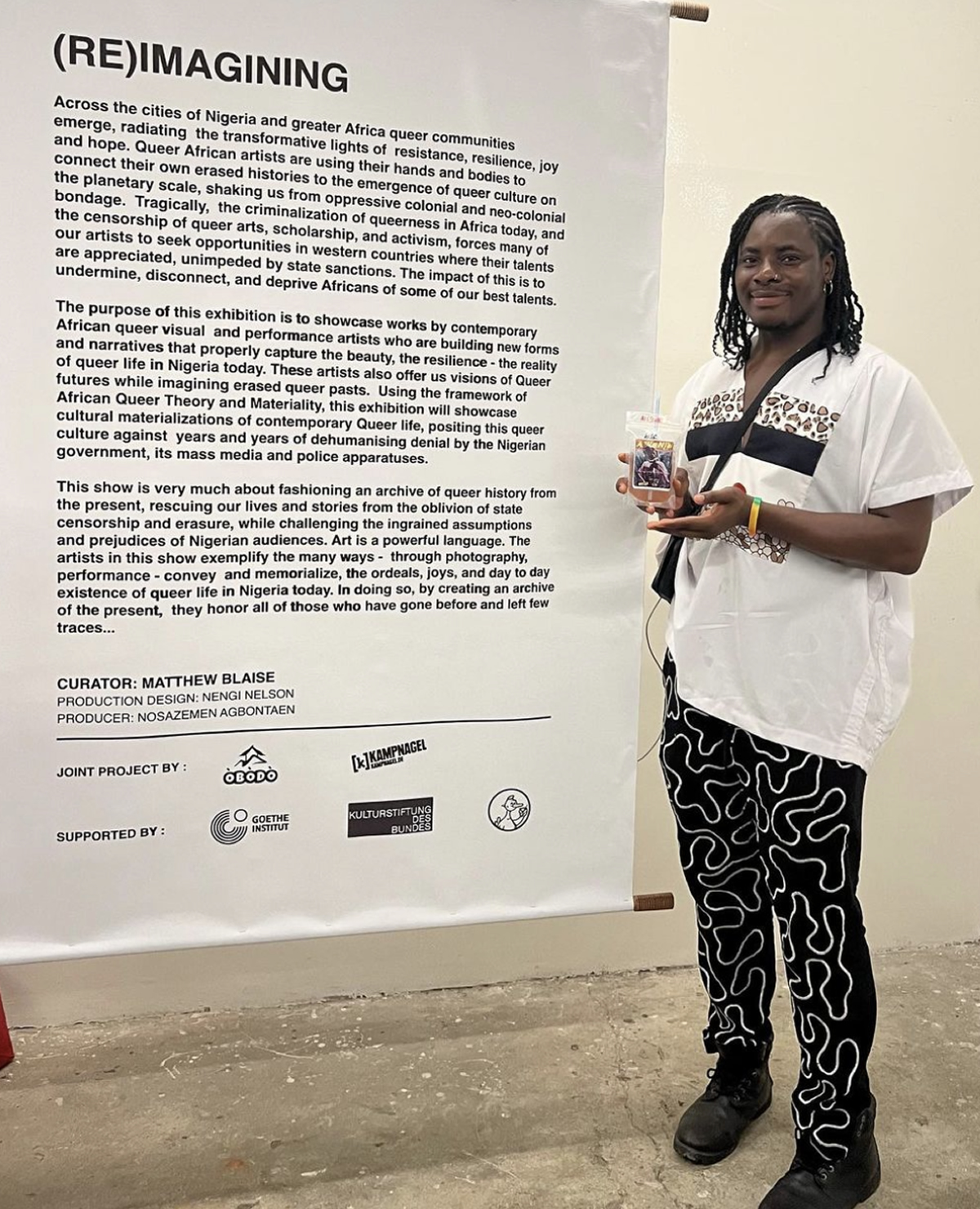
Matthew Blaise has been one of the most vocal activists of queer rights in conservative Nigeria. They’re the founder of Obodo Nigeria, a Nigeria-based non-profit organisation that’s working to promote positive representation and humanisation of queer people through educating, upholding, empowering, and promoting the rights and humanity of all Nigerians.
“Pride month for me is honestly just like every other month,” they say. “I mean, it’s great that it’s been celebrated, but within Nigeria, it’s just like every other month; and I say this because I still have to deal with the struggles of being queer for everyday of my life. For me, it’s also a reminder of my own resilience and resistance within this largely homophobic and transphobic framework of a country. It’s really just a reminder for me to celebrate that power that I have, and the one that has kept me going. I see it as one of those times when I have to remind myself that I am deserving of love, care, and security.”
Chisom Peter Job
Chisom Peter Job is an openly queer journalist and the current managing editor of film and television media company, Statement Films, built for African creators. Job’s work, which has been featured in The Washington Post, the New York Times, Al Jazeera, etc., really focuses on queer life and how that interfaces with our screens.
“Pride month for me is a month of happiness, a month to be very queer, and a month to celebrate queerness in a very different way,” he tells the Blade. “I mean, I celebrate my queerness every other day, but living in Nigeria, Pride month is just that month when there are a lot of things happening to queer people, and [we’re] just free to do whatever. It’s an important celebration done in Nigeria because a lot of things happen that make it easy for queer people here to enjoy what it’s all about. Pride balls happen in other places outside the country, and we’ve managed to create a space for it to easily happen here. Whilst the SSMPA (Same-Sex Marriage Prohibition Act) exists, the Pride tells them that ‘we are here, and we’re here with Pride.’”
Fola Francis
Fola Francis is an openly transgender Nigerian woman who is the founder of the fashion brand Fola Francis and a nascent food (salad) blogger. Last year, she made “herstory” by being the first openly trans woman to walk on the runway at Lagos Fashion Week, one of the biggest fashion conventions in Africa. This year, she played host to the Ball Party of Pride in Lagos.
“Celebrating Pride in a country like Nigeria where queer lives are criminalised is just, for me, pushing back against the shitty laws that exist to invalidate our sexual orientations and gender identities,” she says. “Ballroom Culture, for example, is freedom at its peak. There’s just this level of freedom and no judgement, just community and over-the-top fun. It’s the most beautiful thing ever. The fact that we’re still celebrating and resisting amidst this chaotic climate for queer people is what makes it surreal, and even more special. We’re damning the consequences and celebrating our beauty and uniqueness.”
Olaide Kayode Timileyin
Olaide Kayode is an openly queer Nigerian activist who runs the queer-focuded organization and media, Queercity Media. Although it first started as a podcast called Queercity Podcast, the centre of Timileyin’s work is premised on celebrating and telling the untold stories of LGBTQ Nigerians and across Africa. To that end, they’ve worked with platforms like HBO, Grindr, etc., and have been one of the leading organizers/founders of Pride in Lagos, an annual and one of the most widely anticipated gatherings of queer Nigerians.
“At the core of our work at Queercity is ‘queer joy,’ and that is not just about building resilience every day or speaking against policies, but that we also carry queer joy. That is what Pride means to me,” they say. “It is carrying those traumas, that shame, that fear, and every other negative thing into the dancehall, and celebrating the discarding of them. It’s proof that we still thrive, as we take the little we have, and create joys/smiles from it.”
Rex Okey Opara, Jr.
Popularly called Raldie, Rex Okey Opara, Jr., is an openly queer multidisciplinary musician and artist with an unconventional, creative and fluidity in his tone. His sounds are highly mysterious, and it takes a certain level of attention to grasp the undertone of the message. His songs mostly emerge from a place of personal experience, and are really just a nuanced atonement to life in general. He was one of the key performers at Pride in Lagos, and has had the chance to do a fellowship at a Germany-based talent hub, Goethe Talents.
“When I think of Pride month, I think of it as how every day should be, which is loving life in confidence in who I am as a queer person. It’s really just another time to celebrate every facet and piece of me, without shame, worrying, or expectations,” he tells the Blade. “In Nigeria, there aren’t a lot of opportunities for our queerness to be acknowledged. A lot of times, society shapes itself in such a way that queer people are usually read as invisible and unworthy. I think it’s just as important a celebration as any to say to ourselves that even if the world doesn’t see us, we see ourselves, and we love each other